
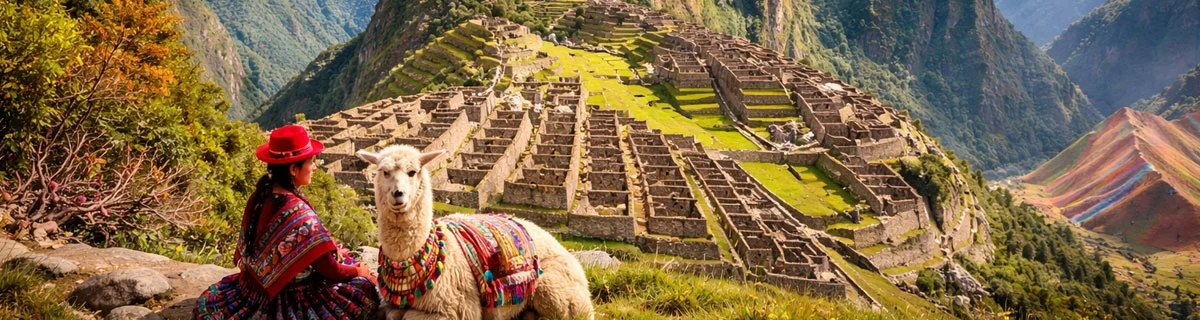
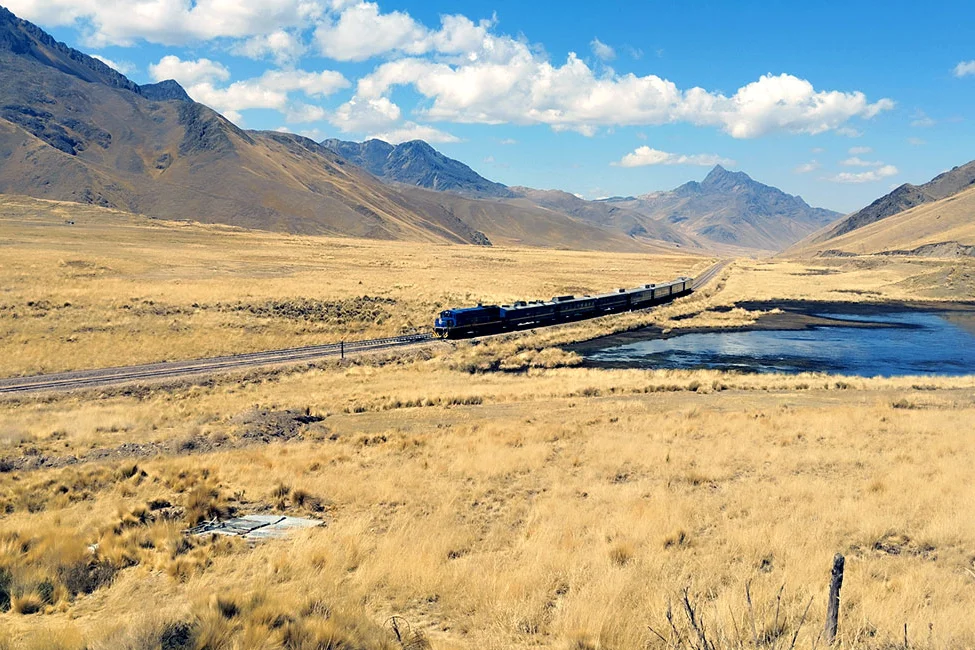
The train between Cusco and Puno is one of the great railway journeys in South America — 385 kilometres across the Peruvian altiplano, climbing past 4,300 metres, ending on the shores of the highest navigable lake in the world.
It is also expensive, slow, and does not run every day. For some travellers it is the highlight of their trip. For others it is money that would be better spent on the lake itself.
We are a tour operator based in Puno, at the end of this line. We do not sell train tickets — PeruRail does — so what follows is the honest version: what the journey actually involves, what it costs, and when it makes sense to take it instead of the alternatives.
Quick answer
| Operator | PeruRail |
| Route | Cusco (Wanchaq station) ↔ Puno (Av. La Torre 224) |
| Distance | 385 km |
| Journey time | Around 10 to 10.5 hours |
| Frequency | Roughly 3 times per week, mainly in the dry season |
| Price | Approximately US$250–400 one way |
| Direction | One way only — it is not a round trip service |
| Included | Three-course lunch, observation car, live music and dances |
Prices, dates and frequencies change by season. Always confirm on the PeruRail website before planning around a specific date.
The two trains — they are not the same thing
This confuses a lot of travellers, because both are operated by PeruRail and both run Cusco–Puno.
PeruRail Titicaca train
The daytime service. You travel in a seat, in a carriage with panoramic windows, with a dining car and an open-air observation platform at the back. Lunch is included. It takes about 10 hours and costs roughly US$250–400 one way. This is the one most travellers mean when they search for "the Cusco to Puno train."
Andean Explorer
A luxury overnight sleeper train with private en-suite cabins, a spa car, and multi-day itineraries. This is a different category of product entirely — think of it as a cruise on rails rather than transport. It costs several times more, running well into the thousands of dollars per person.
The rest of this guide is about the Titicaca train.
Schedules and frequency
The Titicaca train does not run daily. It typically operates around three departures per week, and the schedule is seasonal — service concentrates in the dry season (roughly April to October) and is reduced or suspended during the heaviest rainy months.
Departures are in the morning in both directions, arriving in the evening.
- Cusco → Puno: boarding at Wanchaq station, Av. Pachacuteq s/n, Wanchaq district
- Puno → Cusco: boarding at Av. La Torre 224, Puno — about ten minutes from the lakeshore
Because departures are limited and the train sells out in high season, book one to two months ahead if you are travelling between June and August. PeruRail publishes its timetables by season and they are subject to change, so check current dates directly rather than relying on any third-party page, including this one.
What the journey is actually like
You leave Cusco in the morning and climb steadily out of the valley. The landscape opens up quickly — within a couple of hours you are on the altiplano proper, flat golden grassland with snow peaks on the horizon, herds of alpaca, adobe villages.
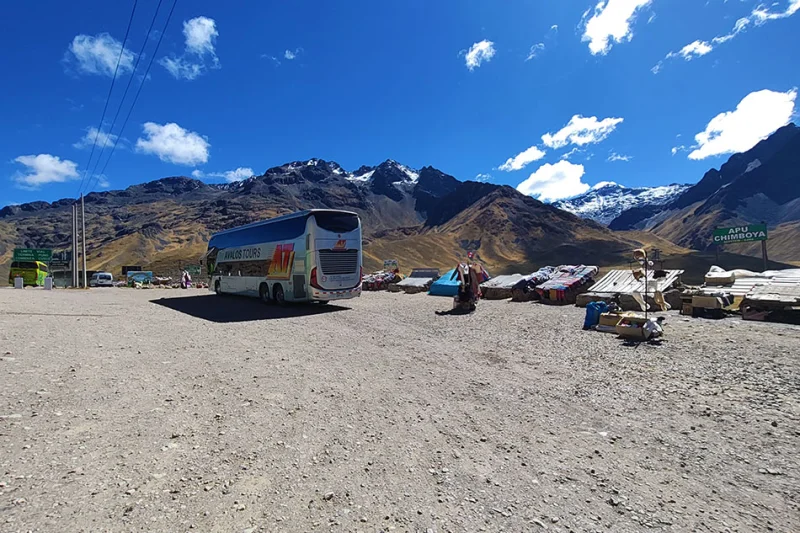
The high point of the route is La Raya pass, at over 4,300 metres, where the train stops and passengers get out onto the platform. This is the natural border between the Cusco region and the altiplano, and on a clear day the views of the Vilcanota range are the photograph everyone comes back with.
Lunch is served in the dining car — a three-course menu built around Peruvian cuisine. There are live music performances and traditional dances from both the Cusco and Puno regions during the journey. The observation car at the rear is open air, which at 4,000 metres means cold and bright: bring a jacket and sunscreen even if the carriage is warm.
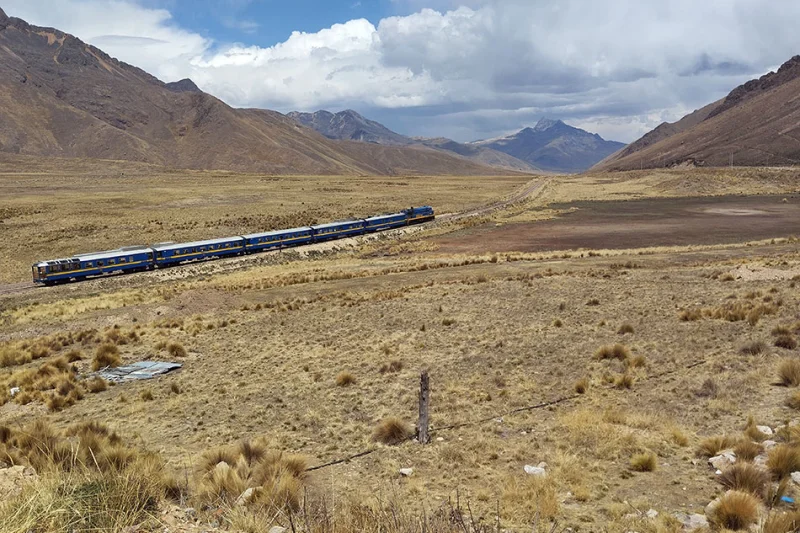
You arrive in Puno in the evening, with the lake right there.
What's included in the price
- One-way ticket, Cusco–Puno or Puno–Cusco
- Three-course lunch in the dining car
- Access to the observation car and lounge
- Live music and regional dance performances
- Luggage allowance: typically one 8 kg backpack plus one 23 kg checked bag
Not included: drinks beyond what is served with the meal, transfers to and from the stations, and tips.
Train vs bus vs private transfer
This is the decision most travellers are actually trying to make.
| Train | Tourist bus | Private transfer | |
|---|---|---|---|
| Time | ~10.5 hours | ~10 hours with stops | ~7 hours direct |
| Price | ~US$250–400 | ~US$25–70 | Varies by group size |
| Frequency | ~3x per week, seasonal | Daily | On request |
| Stops | La Raya pass | Several archaeological and scenic stops | Flexible |
| Best for | The journey as the experience | Value, and seeing sites along the way | Time, comfort, flexibility |
The honest comparison: the train costs roughly six to ten times what a good tourist bus costs, for a journey of similar length. What you are buying is not transport — it is a day out. If a scenic railway journey is something you actively want, it delivers. If you mainly need to get from Cusco to Puno, the money buys a lot of lake time instead.
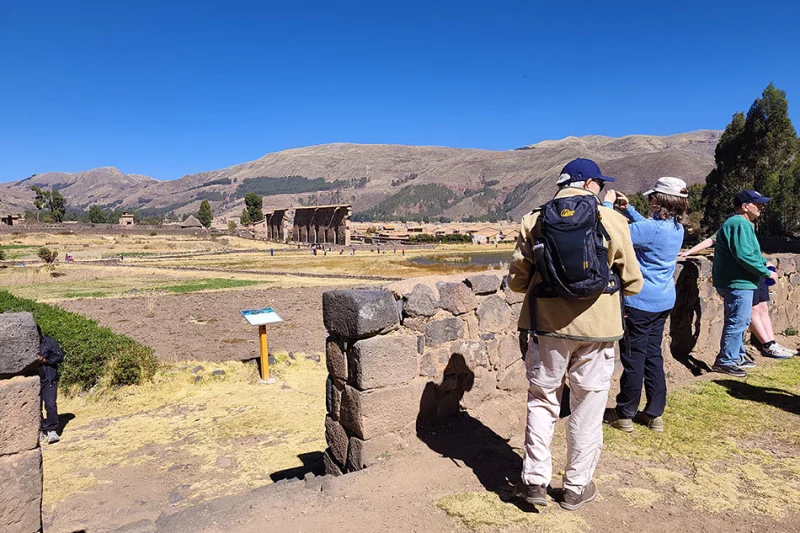
The tourist bus is the option most travellers end up taking, and it is genuinely good: it stops at sites like Andahuaylillas, Raqchi and Pukará along the way, so the transfer day doubles as a sightseeing day. We cover it in detail in our guide to the bus from Cusco to Puno.
There is also a third option most people do not know about, which we will come to below.
Is the train worth it?
It is worth it if:
- Rail journeys are something you enjoy in themselves
- You have the budget and the dates line up with a departure
- You want a slow, comfortable day with meals handled and nothing to organise
- Mobility or altitude makes a long bus day unappealing
It is probably not worth it if:
- You are on a mid-range budget and would rather spend it on Lake Titicaca itself
- Your dates are tight — the train runs only a few days a week
- You want to see the archaeological sites between the two cities, which the train passes but does not stop at
Practical tips
Altitude. The route crosses 4,335 metres at La Raya. If you have come recently from Cusco (3,400 m) you are partly acclimatised, but the pass is significantly higher, and Puno sits at 3,827 m. Take it slowly at the stop, drink water, and read our guide on avoiding altitude sickness in Peru before you travel.
Book direction carefully. The service is one way. If you want to travel Cusco–Puno–Cusco you are buying two separate tickets, and departures may not align.
Sit on the correct side. Heading south from Cusco, the left-hand side gets more of the mountain views for much of the route, though the observation car makes this less critical.
Arrive early. Boarding involves luggage handling and a welcome ceremony; PeruRail recommends arriving well before departure.
Layer your clothing. Warm carriage, freezing observation deck, strong sun at altitude.
The third option: arrive in Puno having seen something
Most travellers treat the Cusco–Puno leg as dead time to be minimised or upgraded. There is a better way to think about it.
The road between Cusco and Puno passes within reach of Pallay Punchu, a striped rock formation in the Apu T'akllo range that looks like a woven Andean poncho — the same geology as Rainbow Mountain, without the crowds. It is still relatively unknown, which is precisely the point.
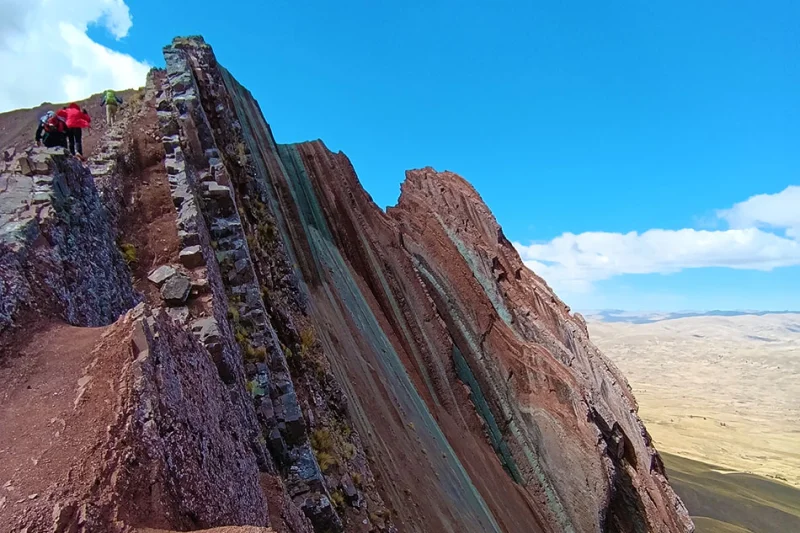
Our Pallay Punchu tour from Puno to Cusco uses the transfer day as the trip itself: you travel between the two cities and visit the mountain in route, arriving without having spent a day only sitting. For travellers who wanted the journey to matter but did not want to spend train money on it, this is usually the answer.
We also run transport services between the two cities if you simply need a reliable, comfortable transfer.
Once you arrive in Puno
The train drops you ten minutes from the lake. Do not treat Puno as a stopover — the reason to come this far south is on the water.

- Things to do in Lake Titicaca — the full guide to the lake
- Uros floating islands — the reed islands, best visited early
- Taquile island — weaving culture recognised by UNESCO
- Amantani island — the overnight homestay, the one people remember
- All our Lake Titicaca tours
Frequently asked questions
How long does the Cusco to Puno train take?
Around 10 to 10.5 hours, including the stop at La Raya pass.
How much does the Cusco to Puno train cost?
Roughly US$250 to US$400 per person one way on the PeruRail Titicaca train, including lunch. The Andean Explorer sleeper is a separate, far more expensive service.
Does the Cusco to Puno train run every day?
No. It operates around three times per week, concentrated in the dry season between April and October. Check PeruRail for current dates.
Can I do a round trip by train between Cusco and Puno?
Not as a single service. You would book two separate one-way tickets, and departure days may not align.
Is the train better than the bus from Cusco to Puno?
They serve different purposes. The train is a scenic experience costing six to ten times more. The tourist bus is better value and stops at archaeological sites such as Andahuaylillas, Raqchi and Pukara along the way.
Where does the train arrive in Puno?
At Av. La Torre 224 in central Puno, about ten minutes from the shore of Lake Titicaca.
Is the Cusco to Puno train safe at that altitude?
For most travellers yes, particularly when arriving from Cusco at 3,400 metres. The route crosses La Raya pass at 4,335 metres but the stop there is brief.
How far in advance should I book the Cusco to Puno train?
One to two months ahead if you are travelling in high season between June and August, when departures sell out. Outside those months, two to four weeks is usually enough.
Planning the Puno end of your trip?
We are based in Puno and have been running tours on Lake Titicaca for years. However you arrive — train, bus, or in route with us — we can help you make the days on the lake worth the journey.
No available comments