
Overview
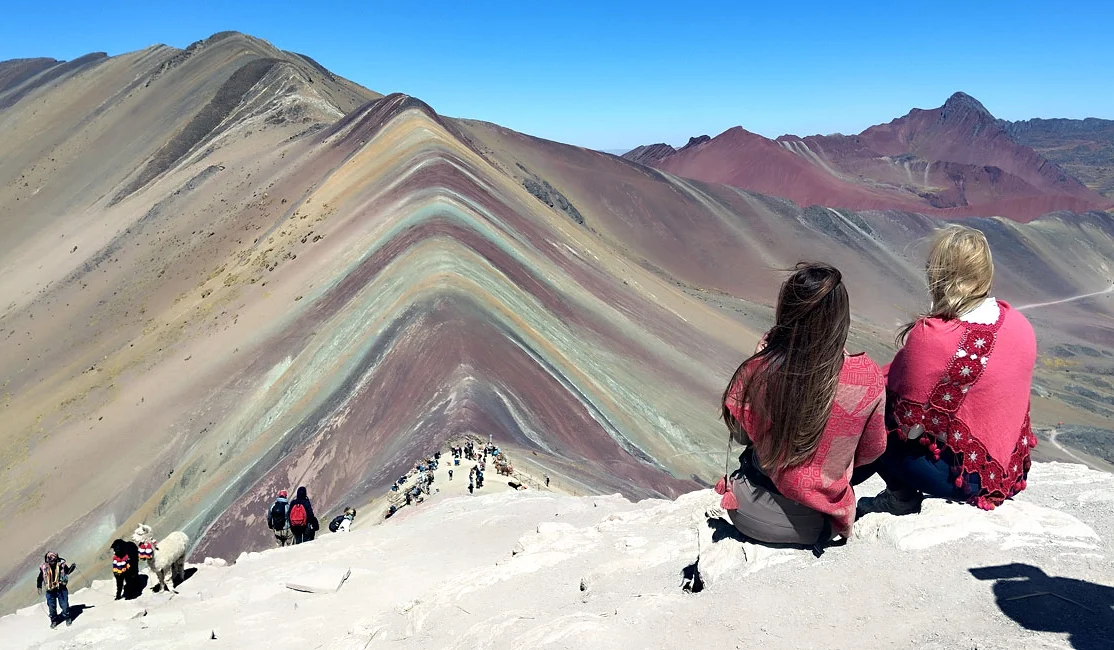
Few landscapes in Peru compare to the striped slopes that make a Rainbow Mountain Tour one of the most sought-after adventures in the Cusco region. Known locally as Vinicunca, the mountain owes its layered reds, golds and turquoise bands to mineral deposits exposed over thousands of years — iron oxide, copper sulfate and other sediments that oxidized differently depending on altitude and moisture. The result is a natural formation that looks almost painted, sitting at over 5,000 meters above sea level in the Cusco region.
The area surrounding Vinicunca is part of the wider Ausangate massif, a glaciated range considered sacred by Andean communities long before the mountain gained international attention. Herds of alpacas and llamas graze along the approach trails, tended by families from Pitumarca and nearby highland villages who still follow traditional pastoral routines. Their presence adds a living, cultural layer to what is otherwise a stark, high-altitude landscape of scree slopes and windswept ridgelines.
Beyond the main viewpoint, hikers often continue toward the Red Valley, a lesser-visited canyon where iron-rich soil creates a deep rust-colored terrain that contrasts sharply with the surrounding grasslands. Condors are occasionally spotted riding thermal currents above the ridges, drawn by the updrafts common at this elevation. Wild vizcachas — rabbit-like rodents native to the high Andes — can sometimes be seen darting between the rocks near the trailhead.
What makes this destination distinctive is how concentrated its highlights are within a single hike: geological color bands rarely found elsewhere on the continent, working pastoral communities largely untouched by mass tourism, and sweeping views of snow-capped peaks including Ausangate itself. It's a landscape that rewards the physical effort of high-altitude trekking with scenery that photographs rar From Cusco, return to Cusco — the classic day trip. Pickup between [hora] and [hora], back in Cusco by [hora]. ely do justice to.
More departure Options
From Cusco, ending in Puno — visit Rainbow Mountain on your way to Lake Titicaca instead of doubling back. We drop you in Puno the same evening, so you save a full travel day.
From Puno, ending in Cusco — the same route in reverse, for travellers heading north.
This las two options start at 6:30, contact us to send you more detail information.
Frequently Asked Questions
How difficult is the hike to Rainbow Mountain?
The hike is short but demanding because of the altitude. From the trailhead you'll walk about 4 km round trip with roughly 300 m of elevation gain, reaching the viewpoint at 5,036 m. Most people take 1.5 to 2 hours to reach the top and around an hour to come down. No technical skill is needed, but you should be in reasonable health and comfortable walking uphill at altitude. If you have heart or respiratory conditions, check with your doctor before booking.
Do I need to acclimatise before this tour?
Yes. We strongly recommend spending at least two full days in Cusco (3,400 m) or Puno (3,800 m) before attempting Rainbow Mountain. Arriving from sea level and hiking to 5,036 m the next day is the most common reason travellers struggle on this trip. Drink plenty of water, avoid alcohol the night before, and eat a light breakfast. Read our guide on how to avoid altitude sickness in Peru.
Can I visit Rainbow Mountain on the way to Puno?
Yes, and it's one of the best ways to do this trip. Instead of returning to Cusco, we can drop you in Puno the same evening, so Rainbow Mountain becomes part of your journey to Lake Titicaca rather than a separate day. The same route works in reverse if you're travelling from Puno to Cusco. Choose your departure and arrival cities when booking.
Is there a horse option?
Yes. Horses are available at the trailhead and can carry you most of the way up, though the final stretch to the viewpoint must be walked. The cost is usually around 80PEN, paid directly to the local horse owners from the surrounding communities. This is not included in the tour price, so bring cash in soles.
Is hotel pickup included?
Yes. We pick you up from your hotel in central Cusco between 4:00 and 5:00 AM to reach the viewpoint before the afternoon weather closes in. If you're departing from Puno, pickup is from your hotel in the city centre at 4:30 If your accommodation is outside the central area, there is an extra charge to pick you up.
What to Bring for Your Rainbow Mountain Tour
- Warm layers (fleece, jacket) — temperatures drop sharply near the summit.
- Comfortable hiking boots or sturdy trainers.
- Rain gear (poncho or waterproof jacket).
- Sunscreen, sunglasses and a hat — UV exposure is high at altitude.
- Water (at least 1.5–2 liters) and light snacks.
- Cash in soles for entrance tips, extra snacks or bathroom use.
- Personal medication, including altitude sickness pills if recommended by a doctor.
- Camera or phone with extra battery — cold weather drains batteries fast.
- Trekking poles (optional, but helpful on the descent).