
Overview
The Sun and Moon Island Tour from Puno takes the southern shore of Lake Titicaca into Bolivian waters and brings travellers back to the same starting point. Departure from Puno is around 07:00, and the route follows the lake edge through Chucuito, Juli and Pomata before reaching the border.
The crossing at Kasani takes about 45 minutes on foot, with exit and entry stamps handled on each side. A valid passport is essential, and most nationalities do not need a visa for Bolivia, though it is worth checking before travelling.
Copacabana lies 8 km past the border. The town's Basilica of the Virgin of Candelaria, finished in 1805, holds a dark wooden statue carved by Francisco Tito Yupanqui in 1583. Cars line up outside on weekends for the blessing ceremony, decorated with flowers and paper garlands.
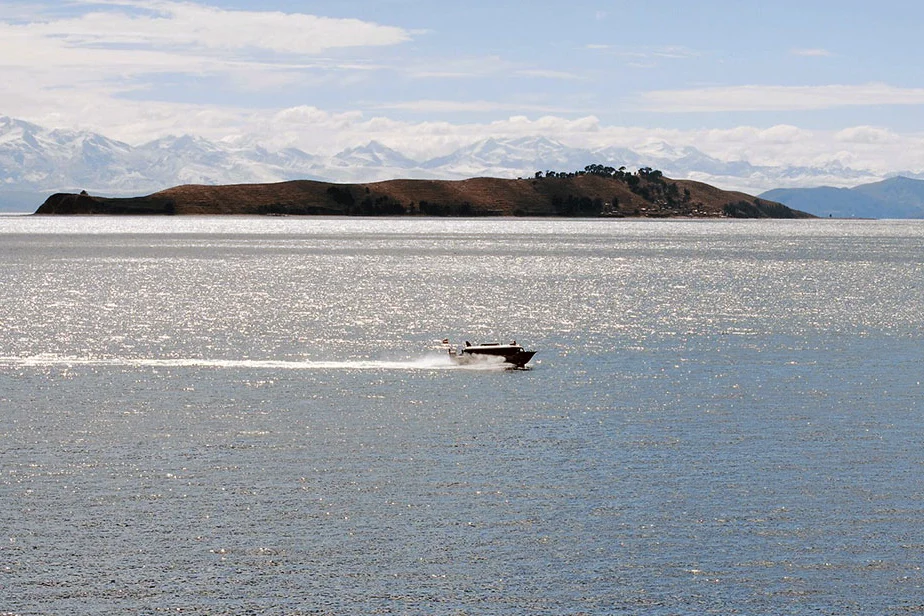
From Copacabana port the boat sails 12 km northwest to Isla del Sol, a crossing of roughly 90 minutes. Andean legend places the origin of Manco Cápac and Mama Ocllo here, which is why the island carries such weight in Inca cosmology.
The island is 9.6 km long with no roads and no vehicles. The northern sector holds the Chincana ruins and the sacred rock of Titikala, while the south rises from Yumani village up the Inca stairway of 206 steps to the Three Springs, fed by underground water since pre-Hispanic times.
Terraces cover almost every slope, some built more than 800 years ago and still planted with potatoes, broad beans and quinoa. Around 800 families live across the three communities of Yumani, Challa and Challapampa.
Isla de la Luna sits 8 km east, smaller and quieter. Its main site is the Iñak Uyu, a temple complex where chosen women, the aqllas, wove and prepared ceremonial goods. The stone niches and courtyard remain largely intact.
The return leg retraces the water to Copacabana and then the road back through Kasani to Puno, with arrival in the evening. Travellers who want to see more of the Peruvian side often pair this route with the floating islands of Uros or a homestay in Llachon or Luquina.