
Overview
The Palcoyo Rainbow Mountain from Puno to Cusco route flips the usual direction of this journey, turning a long transfer day into a hike-and-travel combo for anyone heading north toward Cusco. Instead of a plain bus ride across the altiplano, travelers get an early-morning window into one of the Cusco region's most striking landscapes along the way.
The day begins in Puno, well before sunrise, as the vehicle heads north along the Puno-Cusco highway. The road climbs steadily across the high plateau, passing through Juliaca and over the La Raya pass — the highest point of the crossing — before descending into the Vilcanota valley toward Cusipata, where breakfast is served mid-morning.
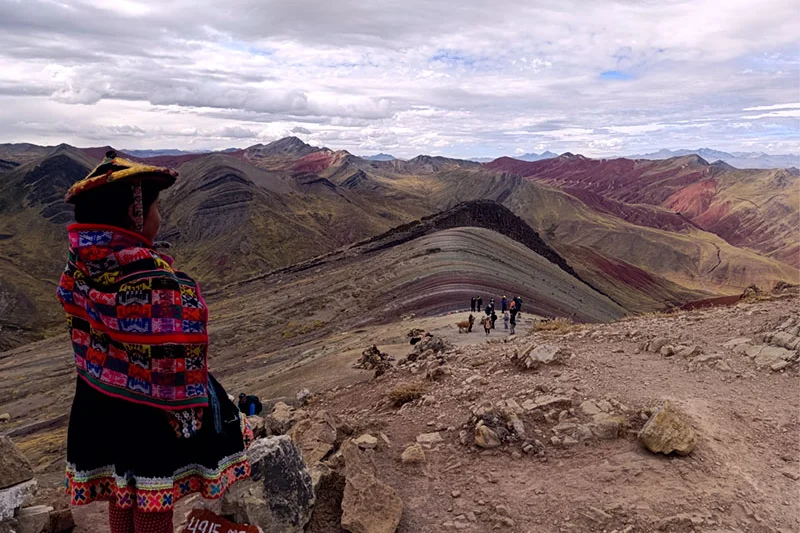
From Cusipata, a short detour on a dirt road leads up to around 4,700 meters, the starting point for the walk to Palcoyo. Unlike the single ridge at Vinicunca, Palcoyo reveals three separate mountains streaked with mineral color, arranged around a small stone forest near the summit, with views that stretch toward the glaciated slopes of Ausangate on clear days.
After the hike, the route continues on to Cusco, arriving in the late afternoon or early evening — enough time to settle in before exploring the historic center. For travelers who've already spent days around Uros, Taquile, Amantani, Llachon, or even further south near Luquina and Colca, this itinerary offers a natural way to close out the Titicaca leg of the trip while still adding a memorable mountain stop.
Rather than treating the Puno-Cusco transfer as dead time, this route makes the crossing itself one of the highlights of a longer southern Peru itinerary.
What to Bring for the Palcoyo Rainbow Mountain Tour
This hike reaches close to 4,900 meters but involves a shorter, gentler walk than other rainbow mountain routes. Here's what to pack:
- Warm layers (temperatures can drop below freezing early morning and after sunset)
- Waterproof jacket or poncho, since weather changes quickly at altitude
- Comfortable walking shoes or light hiking boots
- Sunscreen, sunglasses and a hat — UV exposure is intense at this elevation
- Reusable water bottle (1.5–2 liters recommended)
- Small daypack for cameras, snacks and personal items
- Cash in soles for entrance fees or snacks
- Personal medication and any altitude sickness remedies (coca leaves or tea are available locally)